









Imeda Kakhiani: A Life Shaped by Faith, Chance, and Tragedy
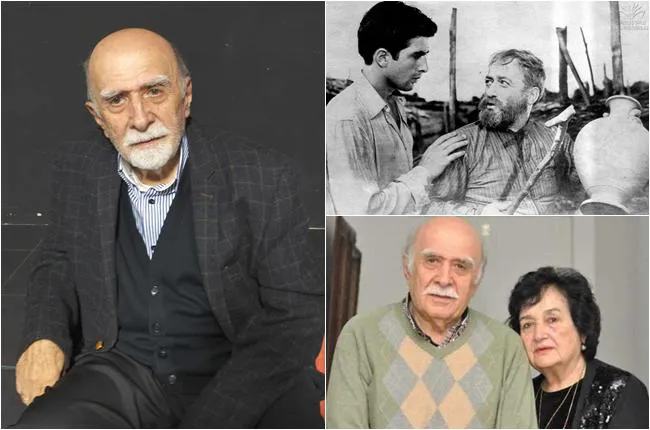
From the “Public Interview” series
Tina:
Mr. Imeda, welcome. You were born in the village of Etseri and finished school in Tbilisi. How did you end up in the capital?
Imeda:
My father was exiled to Siberia when he was young and returned to Georgia seven years later. He wasn’t allowed to live in the city, only in the countryside, so he settled in his ancestral village, where he married. I was their first child — he named me Imedi (“Hope”) because he said that after everything, he still had hope.
I grew up in the village until I was ten, then my aunt, who worked at a bank and had no children of her own, brought me to Tbilisi. She raised me lovingly and took me to church every Sunday, even though that was considered a crime in Soviet times. Sadly, when I was twelve, she passed away suddenly, leaving me completely alone.
Neighbors and my teachers stood by me in court so I wouldn’t be evicted from our state-owned apartment. Thanks to them, the flat was transferred to my name — that’s how I stayed in Tbilisi, in the Plekhanov district.
Unknown:
Why did you decide to become an actor?
Imeda:
Actually, I never planned to. I wanted to be a doctor — even took the entrance exams but didn’t score enough to get in. At that time, if you didn’t have connections, it was almost impossible.
My neighbor, Nodar Firanishvili, was studying at the Theatre Institute. He encouraged me to try acting and even helped me prepare for the entrance exams. I wasn’t confident at all — during my audition, I stumbled and forgot my lines several times. But, strangely enough, I passed. Later I found out that one of the professors had seen something in me and personally made sure I was accepted. That’s how my acting career began — purely by chance.
Vazha:
Your first film was Sabudareli Chabuki (“The Brave Man of Sabudaro”). How did you get the role of Gogita?
Imeda:
A fellow student told us that director Shota Managadze was casting for the film and looking for young actors. I went along out of curiosity. During the audition, they asked me to read some lines and filmed me. A few days later, I learned I’d been chosen for the role — supposedly approved by a man who introduced himself as someone close to the director. Later, I discovered he was actually the director’s driver! (laughs) But that’s how my first big role happened.
Konomokhvaruli:
You’ve worked with many directors, but you speak especially fondly of Eldar Shengelaia. Why?
Imeda:
Because Eldar was a true master. In cinema, everything depends on the director — the rhythm, the editing, the smallest details. Eldar knew exactly what he wanted and could turn even a simple scene into art. He was wise, thoughtful, and deeply patriotic.
He and Tamaz Meliava returned from Moscow after studying at VGIK and made White Caravan together — their first masterpiece. We became close friends and worked together for years.
Viewer:
What does the role of Platon Samanishvili in Samanishvili’s Stepmother mean to you, and why do you think Shengelaia chose you for it?
Imeda:
Eldar once told me he couldn’t find the right actor for Platon and asked me to try. At the time I weighed 120 kilos! I told him I didn’t look like Platon at all, but he insisted. He put me on a strict diet, and by the time filming began, I had lost 20 kilos. Even the horse I rode in the film had to go on a “diet” — they starved it to make it look thinner. We both suffered together! (laughs) But that’s how I became Platon.
Nitsa:
You were friends with Eldar Shengelaia in life, too. What kind of person was he?
Imeda:
He was a great artist and a great Georgian. In difficult times, when many were afraid to speak, he openly defended Georgia’s independence — even addressing Gorbachev directly at the Soviet Congress. He loved his country deeply and never compromised his principles. He passed away soon after finishing his last film, which will be released this November.
Nato:
The most tragic moment of your life was losing your son. How did that affect you?
Imeda:
There’s no greater pain. My son Lado was an extraordinary boy — smart, talented, already acting in films by age fourteen. Then, suddenly, he fell ill with a rare disease. We tried everything — doctors from Moscow, even specialists who treated cosmonauts — but nothing helped.
People say time heals, but that’s not true. The pain only deepens. There isn’t a single day I don’t think of him.
Nina:
Your daughter Eka is also an actress. Did you encourage her to follow in your footsteps?
Imeda:
No, that was her own decision. She grew up on stage — sang in the children’s ensemble “Mziuri,” played instruments, and loved performing. I only told her that acting requires full dedication — you have to give your life to it. She chose that path herself and has done beautifully. She’s won awards for songwriting and performs in theater now. I’m proud of her.
Imeda (closing):
Thank you to everyone who listened so patiently. I wish you all happiness, strength, and peace.